

High Strength Microspheres for Oil & Gas
An HGM candidate for balancing the density goal with the intended pressure and processing route.
White microspheres, up close.
Illustrations show the powder appearance and hollow spherical form. These are visual concepts, not photographs or SEM measurements of an HGS 6000 production batch.
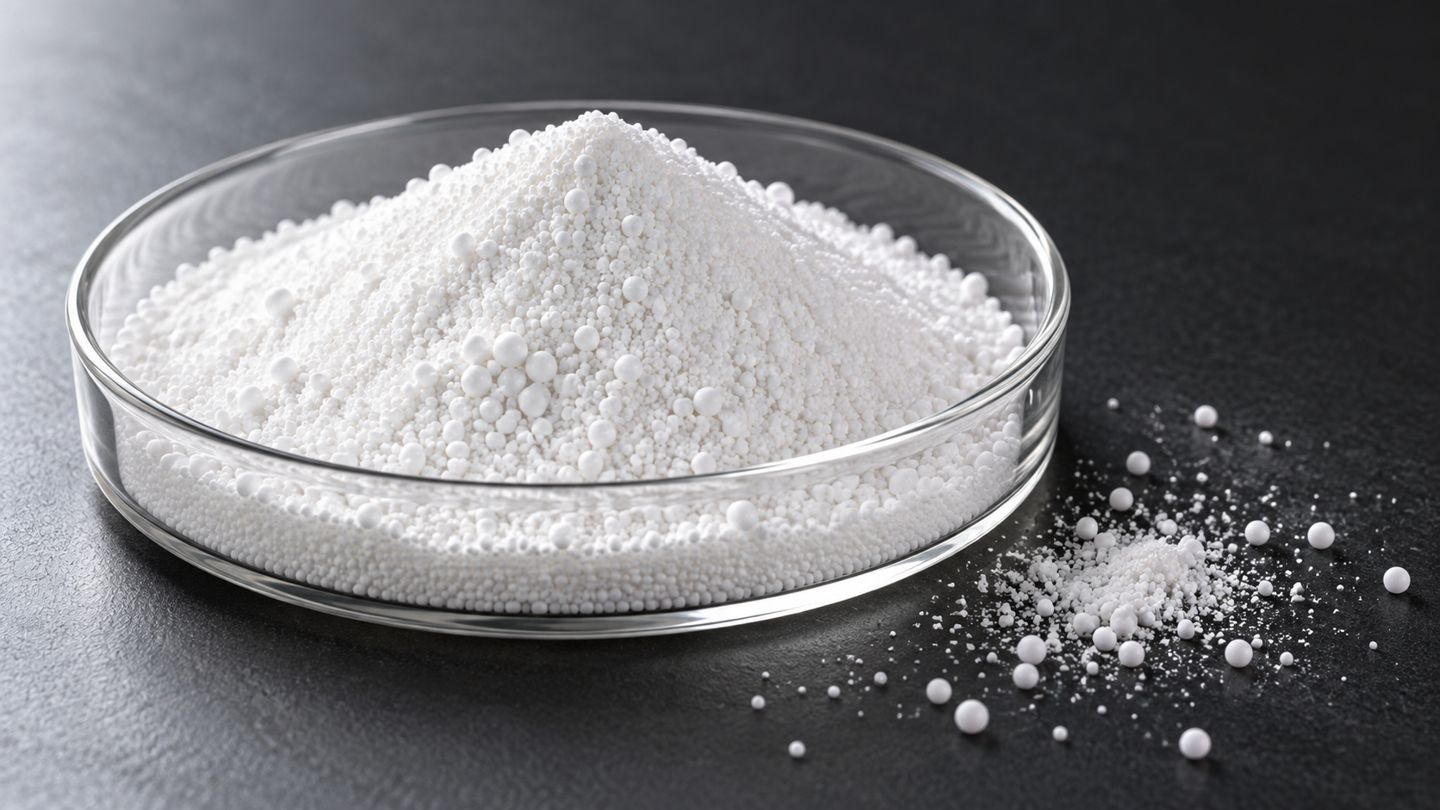
White microsphere material
Illustrative product appearance; request a production sample for inspection.
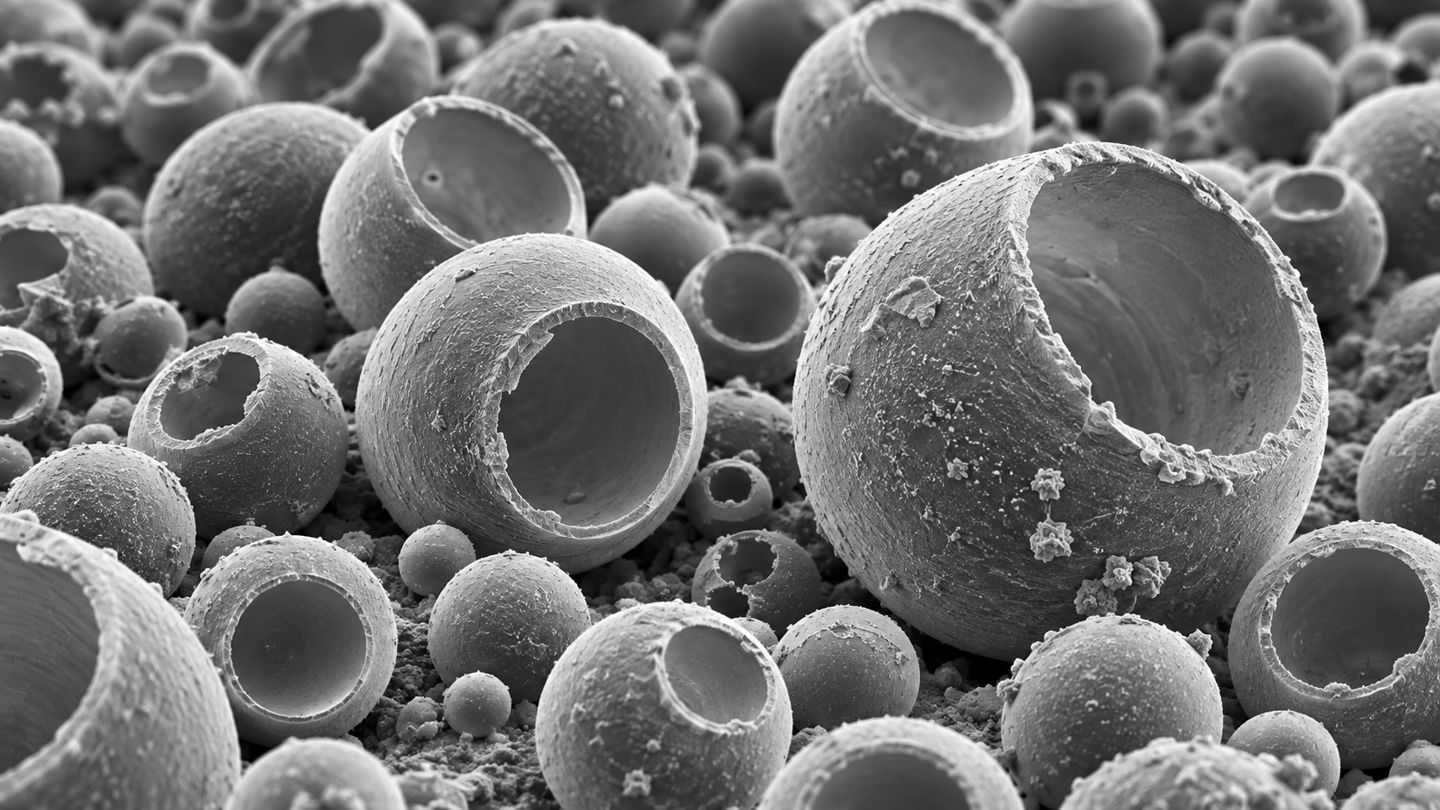
Hollow sphere structure
SEM style illustration, not an actual instrument micrograph or grade specific particle analysis.
A defined starting point for formulation work.
HGS 6000 is a Geospheres grade reference for comparative testing in well fluids and cement. Its specific density, particle size and isostatic survival need to be documented by grade-specific testing.
The selection question is practical: can the intact spheres deliver the target density after the actual mixing, pumping and pressure exposure? The answer comes from a representative test, not the grade code alone.

Application pathways.
Cementing pressure window
Model the hydrostatic pressure at each stage of placement and compare alternative slurry designs.
Drilling fluid circulation
Check particle survival through the actual pumps, bit and solids-control path.
Fluid reconditioning
Measure retained density after circulation before evaluating reuse.
Typical reference values.
These figures come from the supplied third-party cementing sales card. They are useful screening benchmarks, not tested Geospheres HGS 6000 specifications or batch results.
Test basis: isostatic pressure test in Nitrogen. All values are typical reference data, not for specification purposes. Confirm the offered Geospheres grade with its approved TDS, batch COA, and slurry compatibility and pressure-survival tests before job design.
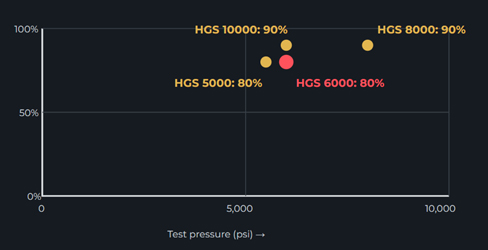
Four reference test points.
The supplied sales card reports minimum fractional survival at one isostatic pressure for each reference. The red point marks HGS 6000; the other points help compare the four pages.
These are external typical screening values, not Geospheres test results. No survival curve between points is supplied. The 8000 reference in the card is designated 8000X; HGS 10000 is shown at 6,000 psi, not 10,000 psi.
Survival at specified isostatic test pressure
HGS 6000 FAQs.
No. Confirm pressure survival and test conditions from the approved grade-specific technical data sheet.
True particle density, D10/D50/D90 size distribution, isostatic survival and retained density after processing.
Both fluid families may be screened, but wetting, stability and compatibility must be tested with the actual recipe.
Use a controlled introduction method and measure sphere survival after the actual mixing and pump route. Avoid assuming the initial dry-powder data represents the final system.
No. The chart shows typical points from the supplied third-party cementing card, not measured Geospheres performance. Approved grade and batch data are required for product claims.
Only if post-circulation particle survival, density and fluid properties remain within the job requirements.
Evaluate HGS 6000 in your system.
Send the density target, pressure profile, base-fluid or cement recipe and mixing route for a focused discussion.
Contact EXPLORAX ↗