
GPZP-10D
Silver Zirconium Phosphate
A sophisticated Silver Zirconium Phosphate inorganic antimicrobial — Ag⁺ ions immobilised in a crystalline zirconium phosphate lattice for sustained, broad-spectrum 24/7 protection. Thermally stable to 600–800°C. Non-yellowing. Chemically resistant. For plastics, coatings, medical devices & water systems.
GPZP-10D — Silver Zirconium PhosphateAntimicrobial Additive
GPZP-10D uses crystalline zirconium phosphate as its silver ion carrier — a rare, chemically resistant inorganic mineral that is stable in both acidic and alkaline environments. This makes it the preferred antimicrobial grade for applications involving aggressive chemical exposure, high temperatures, and long service life requirements that other carrier systems cannot sustain.
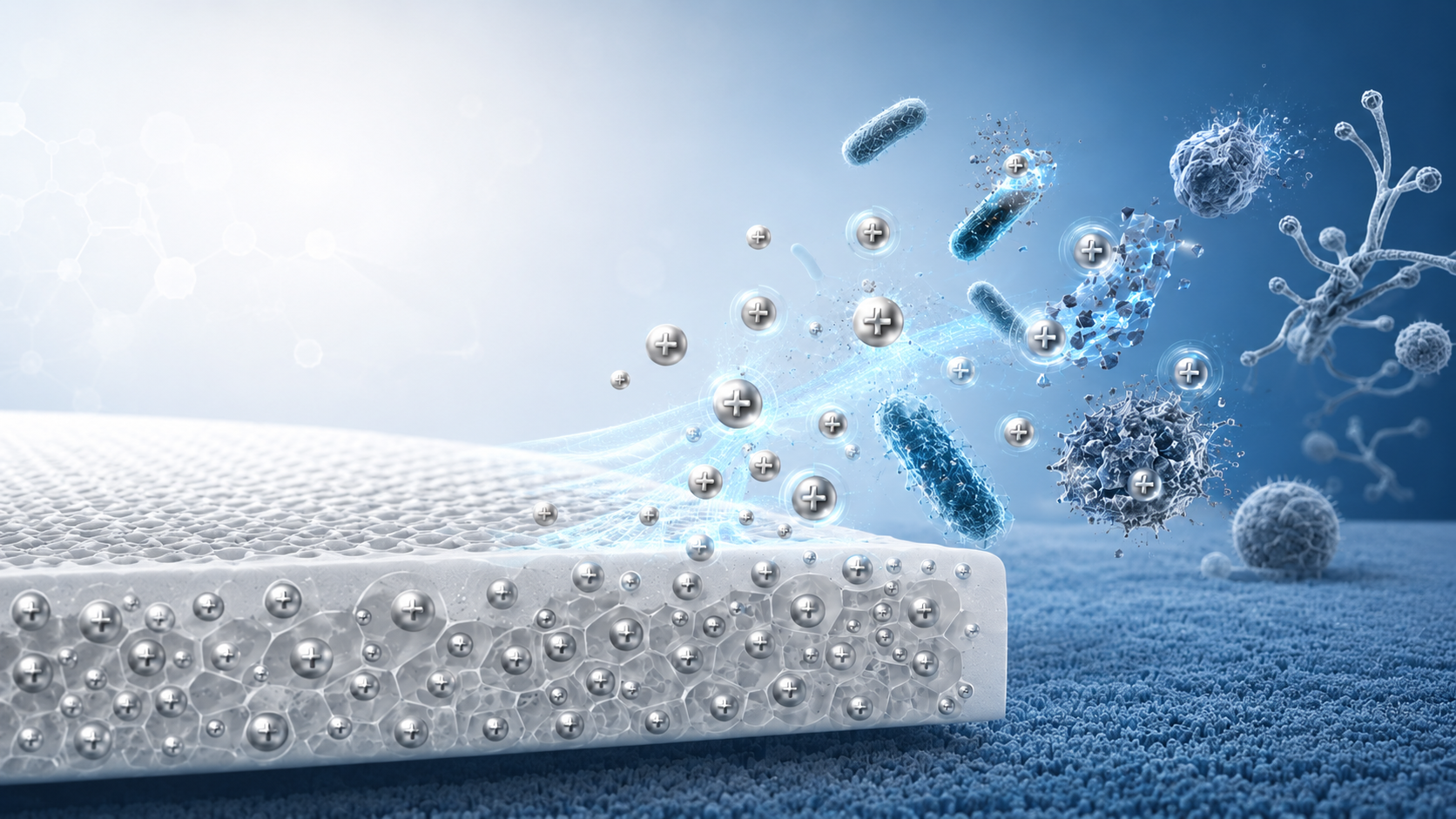
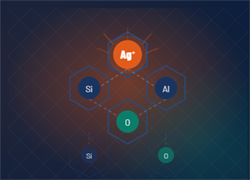
Silver Ions Locked in a Crystalline Zirconium Phosphate Lattice GPZP-10D is a sophisticated, high-performance Silver Zirconium Phosphate inorganic antimicrobial, engineered to provide an uncompromising defence against a broad spectrum of bacteria, fungi, and odour-causing microbes. At the molecular level, potent silver ions (Ag⁺) are strategically immobilised within a robust crystalline zirconium phosphate framework through ion-exchange. This controlled release mechanism allows silver to be delivered to the surface whenever microbial activity or moisture is present — providing a permanent, 24/7 antimicrobial barrier that remains active for the entire lifecycle of the treated product, making it the gold standard for long-term hygiene in high-demand industrial applications.
Thermally Stable to 600–800°C — Non-Yellowing by Design The inorganic nature of GPZP-10D provides decisive advantages over traditional organic biocides, particularly in extreme environments. It is inherently thermally stable up to 600–800°C and chemically inert — withstanding high-temperature polymer processing, industrial coating curing, and ceramic firing without decomposition or volatilisation. Critically, it is engineered to be non-yellowing, preserving the optical clarity and colour integrity of host materials. This makes it the technically preferred choice for white and pastel polymers, bright architectural coatings, transparent films, and precision medical-grade components where colour drift is commercially unacceptable.
Exceptional Chemical Resistance — Where Other Grades Fall Short What truly distinguishes GPZP-10D is its exceptional chemical resistance. The zirconium phosphate crystal lattice is unaffected by most acids, alkalis, organic solvents, and formulation additives — environments where zeolite structures can partially degrade and borosilicate glass matrices may be etched. This makes GPZP-10D the correct choice for applications involving aggressive chemical contact: solvent-borne industrial coatings, high-pH cementitious construction materials, water treatment components exposed to disinfectants, medical device plastics subjected to sterilisation chemicals, and epoxy systems where acid catalysts are present.
Versatile — Works Across 10 Industrial Applications GPZP-10D is characterised by excellent dispersibility and seamlessly incorporates into PP, PE, ABS, PVC, PET, PU, acrylics, and epoxies at 0.2–1.0% starting dosage — with up to 2.0% for high-exposure applications. Its fine particle size (D50: 1–5 µm, >99% inorganic matrix purity) ensures uniform distribution without compromising mechanical properties, tensile strength, or processing rheology. From water-handling systems and medical-grade plastics to performance textiles, industrial sealants, and food-contact surfaces, GPZP-10D delivers a scientifically rigorous and durable antimicrobial solution for manufacturers committed to the highest standards of biosafety and material longevity.
Quick Specifications
GPZ-10N| Form | White to Off-White Fine Powder |
| Active System | Silver Zirconium Phosphate |
| Silver (Ag⁺) Content | 1–3 wt% |
| Particle Size (D50) | 1–5 µm (custom grades available) |
| Purity | >99% inorganic matrix |
| True Density | 2.8–3.2 g/cm³ |
| Bulk Density | 0.8–1.2 g/cm³ |
| Mohs Hardness | 4–6 |
| Thermal Stability | 600–800°C |
| pH (5% slurry) | 5–7 (slightly acidic to neutral) |
| Solubility | Insoluble in water & organic solvents |
| Colour Stability | Non-yellowing — white & pastel safe |
| Chemical Resistance | Acids, alkalis, solvents — stable |
| Dosage (Starting) | 0.2–1.0% on total weight |
| Dosage (High-Risk) | 0.5–2.0% |
| Packaging | 5 kg / 25 kg laminated bags |
| Odour | Odourless |
| Shelf Life | 24 months |
Where GPSG-10DL Delivers Lasting Protection
GPSG-10DL's amorphous silver glass technology is purpose-built for four industrial material systems — plastics, coatings, construction chemicals, and sealants — where long-service antimicrobial protection, not short-term surface treatment, is the requirement.
Long-Lasting Antimicrobial in PP, PE, ABS, PVC, PET & Engineering Plastics
GPSG-10DL's thermal stability (600–800°C) allows it to survive injection moulding, extrusion, blow moulding and compounding without loss of antimicrobial activity. Its non-yellowing properties and ultra-fine particle size ensure no impact on colour, gloss or mechanical performance of the finished plastic article. Ideal for masterbatch manufacturing and direct compounding applications.
Medical Device Plastics
Instruments, housings and high-touch surfaces requiring disinfectant resistant antimicrobial protection.
Consumer Appliances
Refrigerators, air conditioners, washing machines and kitchen appliance interiors.
PVC & Engineering Components
Profiles, sheets, fittings and moulded engineering components with permanent protection.
Antimicrobial Architectural, Industrial & Protective Surface Coatings
GPSG-10DL offers exceptional chemical stability in both water-borne and solvent-borne coatings. The additive remains active even in aggressive coating chemistries where conventional antimicrobials degrade. Its non-yellowing characteristics make it suitable for white paints, clear coatings and food-contact protective finishes.
Architectural Paints
Hospitals, schools, food processing facilities and interior hygiene coatings.
Industrial Epoxy Coatings
Chemical resistant floor coatings and industrial maintenance systems.
Packaging & Printing Inks
Antimicrobial packaging coatings, OPV varnishes and specialty printing applications.
Water Handling Systems, Medical Equipment & Filtration Media
GPSG-10DL withstands the harsh conditions encountered in water treatment environments including disinfectants, moisture and variable pH exposure. The highly stable inorganic silver matrix minimizes leaching while maintaining long-term protection for filtration and medical applications.
RO Housings & Pipes
Water purification systems, storage tanks and pipe fittings resistant to biofilm formation.
Medical Device Components
Trays, instrument housings and handles compatible with repeated sterilization cycles.
Filtration Media
Air and water filters with long-lasting microbial growth resistance.
Construction Materials, Sealants, Textiles & Nonwoven Finishes
GPSG-10DL performs exceptionally well in high-pH cementitious systems, grouts and sealants where organic biocides typically fail. It also provides durable antimicrobial performance in hygienic textiles and nonwoven applications even after repeated washing cycles.
Grouts, Caulks & Flooring
Long-lasting protection for cementitious products, adhesives and flooring systems.
Textiles & Nonwovens
Odour control and antimicrobial protection through repeated washing cycles.
Food Contact Surfaces
Suitable for regulated environments requiring durable antimicrobial performance.
| Parameter | Unit | Specification / Typical Value |
|---|---|---|
| Product Type | — | Silver Zirconium Phosphate inorganic antimicrobial additive |
| Active System | — | Silver Zirconium Phosphate |
| Appearance | — | White to off-white fine powder |
| Odour | — | Odourless |
| Silver (Ag⁺) Content | wt% | 1–3 (typical); general range 0.5–1.8 |
| Base Matrix | — | Crystalline zirconium phosphate |
| Particle Size (D50) | µm | 1–5 (custom grades available) |
| Purity | — | >99% inorganic matrix |
| True Density | g/cm³ | 2.8–3.2 (general spec: 2.0–2.25) |
| Bulk Density | g/cm³ | 0.8–1.2 |
| Mohs Hardness | — | 4–6 |
| Thermal Stability | °C | Up to 600–800 (max. use ~500°C per general specification) |
| pH (5% slurry) | — | 5–7 (slightly acidic to neutral) |
| Solubility | — | Insoluble in water & organic solvents |
| Colour Stability | — | Non-yellowing — suitable for white & pastel formulations |
| Chemical Resistance | — | Stable to most acids, alkalis, solvents, and formulation additives |
| Compatibility | — | PP, PE, ABS, PVC, PET, PU, acrylics, epoxies; water-borne & solvent-borne coatings; sealants; mortars |
| Dosage (starting) | % | 0.2–1.0 on total formulation weight |
| Dosage (high-exposure / high-risk) | % | 0.5–2.0 (after performance confirmation trial) |
| HS Code | — | 2842.10.00 |
| Transport Classification | — | Not regulated as dangerous goods / Non-hazardous |
| Packaging | — | 5 kg / 25 kg multi-layer laminated bags; custom sizes on request |
| Shelf Life | months | 24 (original sealed container, cool dry storage) |
Long-Lasting Antimicrobial Performance
Controlled silver ion release from the glass matrix ensures continuous antibacterial and antifungal protection throughout the product's service life — not a short-lived burst at initial production.
Broad-Spectrum Activity
Effective against a wide range of bacteria and fungi — grade-dependent efficacy covers common pathogens and spoilage organisms including mold, mildew, and odour-causing microbes.
High Thermal Stability for Polymer Processing
Stable up to 300°C — suitable for PVC, PE, PP, and standard engineering plastic compounding, extrusion, and injection moulding processes without loss of antimicrobial activity.
Reduces Mold, Mildew Staining & Odour
Inhibits microbial-induced surface staining, discolouration, and odour development — particularly valuable in construction materials, sealants, and polymer products in humid environments.
Low Volatility — Long-Term Retention
Silver permanently anchored within the glass network does not evaporate, migrate, or volatilise under normal use conditions — ensuring reliable, measurable protection over the full product lifetime.
Built for Industrial Material Protection
Designed specifically for industrial applications in plastics, coatings, construction chemicals, and sealants — not a consumer surface treatment, but a durable in-built solution.
Alkali-Stable in Cementitious Systems
Unlike organic biocides that degrade rapidly in high-pH mortar and grout environments, the inorganic glass matrix resists alkaline conditions — maintaining efficacy in cement-based construction materials.
Non-Leaching Performance
Silver ions release at a controlled rate from within the glass structure — not freely leaching. This prevents rapid depletion and ensures the antimicrobial effect is sustained rather than consumed at the surface.
Inorganic — No Organic Residues
No VOCs, no organic breakdown products, no reactive intermediates. GPSG-10DL is a purely inorganic antimicrobial system — compatible with formulations where organic biocide restrictions apply.
Wide System Compatibility
Compatible with PVC, PE, PP, engineering resins, waterborne and solvent-borne coatings, acrylic and hybrid sealants, tile grouts, polymer mortars, and composite building boards.
GPZP-10D is classified as non-hazardous under standard transport and chemical handling guidelines. It exhibits low toxicity when used as intended. Always refer to the current Safety Data Sheet (SDS) and observe standard chemical handling precautions listed below.
Non-Hazardous Classification
GPZP-10D is classified as non-hazardous under standard transport and chemical handling guidelines — no special transport restrictions or hazmat documentation required.
Low Toxicity Profile
Silver-exchanged Zeolite is considered low in toxicity when used as intended. Avoid ingestion and prolonged direct skin contact. Not classified as a carcinogen or mutagen.
Dust Inhalation Precaution
Fine powder may cause temporary mechanical irritation to the respiratory tract. Use appropriate dust masks (FFP1/FFP2) or respirators during handling and powder transfer operations.
Eye Contact Protection
Dust particles may cause mechanical irritation. Wear protective eyewear — safety glasses or chemical splash goggles — to prevent eye exposure during handling.
Skin Contact Precaution
May cause mild dryness or irritation with prolonged contact. Use chemical-resistant gloves (nitrile or latex) while handling bulk quantities in production environments.
Ventilation Requirements
Handle in a well-ventilated area or under local exhaust ventilation (LEV) to minimise airborne dust concentration below occupational exposure limits.
Chemical Stability
GPZP-10D is chemically stable, non-reactive, non-flammable, and does not decompose under normal processing or storage temperatures. Avoid contact with strong mineral acids.
Environmental Safety
Product is insoluble and non-leaching — presents low risk to the environment when used correctly. Avoid direct bulk release into waterways, drains, or natural water bodies.
Storage Safety
Store in a cool, dry location away from moisture sources. Keep bags tightly sealed to maintain performance and prevent absorption of atmospheric humidity.
Regulatory Compliance Note
Always consult local regulations for specific permissible limits of silver-containing additives, particularly in food-contact and medical device applications. Regional limits may vary.
Storage Conditions
Store in a cool, dry, well-ventilated area. Keep bags or containers tightly sealed to prevent moisture absorption and preserve product performance over the shelf life.
Avoid Moisture Exposure
Zeolite materials can readily absorb ambient humidity — prolonged moisture exposure may affect ion-exchange capacity and performance. Always reseal packaging immediately after use.
Temperature Stability
Stable under normal ambient temperatures. Avoid direct exposure to high humidity or extreme temperature swings during storage. Do not store near open drains or wet areas.
Handling Precautions
Handle with care to minimise dust formation. Use appropriate PPE — gloves, dust mask/respirator (FFP1 minimum), and safety glasses during all production handling operations.
Bulk Transfer Safety
When transferring powder between vessels, use enclosed dust-controlled equipment or local exhaust ventilation systems to minimise airborne particulate exposure in the workplace.
Compatibility
Chemically inert and compatible with most polymers, coatings, ceramics, and adhesive systems. Avoid strong mineral acids (HCl, H₂SO₄) that may degrade the Zeolite crystal structure.
Spill Response
In case of spillage, sweep up carefully with a soft brush to avoid generating airborne dust. Collect in a labelled bag and dispose of according to local environmental regulations.
Hygiene Measures
Wash hands thoroughly after handling. Do not eat, drink, or smoke while working with the product. Follow standard industrial chemical handling hygiene practices at all times.
Shelf Life — 24 Months
Under appropriate sealed dry storage conditions, GPZP-10D maintains full performance for 24 months from the manufacturing date without loss of antimicrobial activity.
For laboratory trials, pilot testing, and initial formulation development. Inner PE liner for moisture protection.
Standard commercial production pack with moisture-resistant polyethylene inner liner to maintain product integrity.
Custom packing sizes available on request for laboratory, pilot-scale, and specialty application requirements.
Labelling & Traceability
Each package is clearly labelled with product name, batch number, net weight, manufacturing date, and shelf-life date for full traceability and quality control compliance.
Sealing & Protection
All bags are inner-lined with moisture-resistant polyethylene liners to maintain product integrity and performance during long-distance storage and international transportation.
Handling of Packaging
Avoid puncturing or tearing bags during storage and handling. Store bags off the floor on wooden pallets to prevent moisture ingress from concrete flooring.
International Transport
Classified as non-dangerous goods under ADR/IATA/IMDG — can be shipped by road, sea, or air freight without special transport restrictions or hazardous materials documentation.